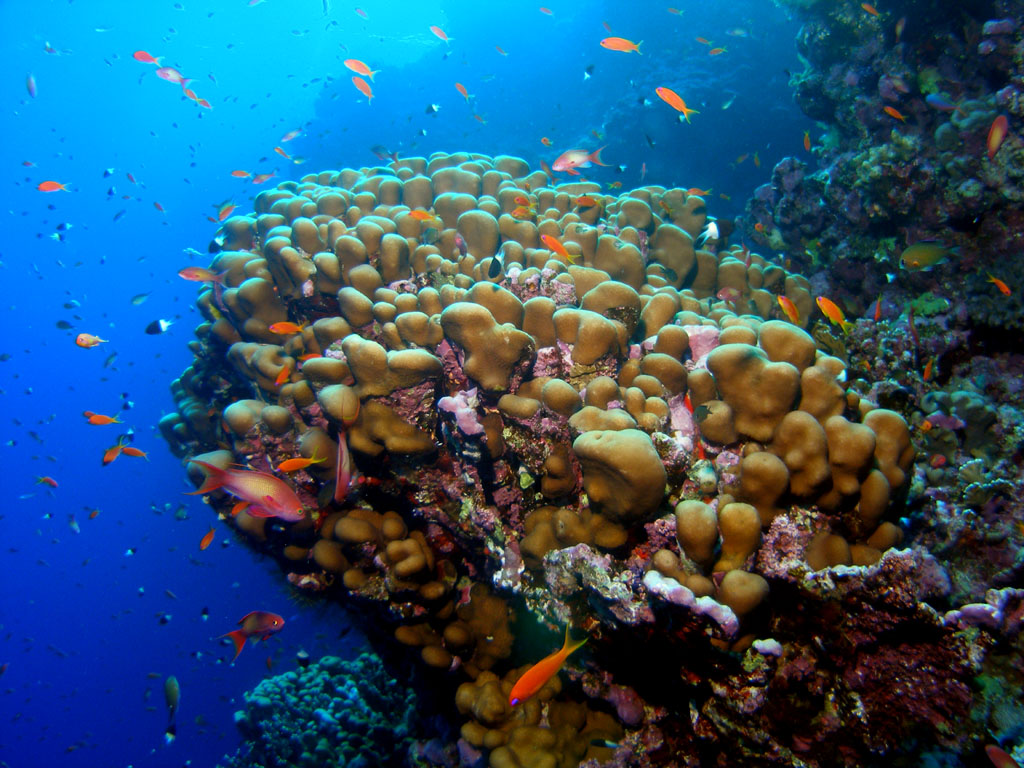
Since May, the Month of the Ocean, is ending, I’ve decided to write a post listing 5 facts that make the oceans special and vital to sustaining the planet. This year’s focus is on coral reefs, a biologically important component of the oceans.

ONE: Coral reefs are one of the richest communities in the world.
Coral reefs, as described by Johannes, are among the ” most biologically productive, taxonomically diverse, and aesthetically celebrated communities”. A single reef can host hundreds of soft and hard corals, thousands of sessile and motile invertebrates, and a host of fishes that visit to feed, mate, or get themselves cleaned.
The Great Barrier Reef, for example, spans 1,600 km along the coastline and is composed of more than 2,000 individual reefs. A “compound reef” like the GBR must then possess a massive number of organisms, from bottom-dwelling organisms to massive anemones, that interact in complex manners.
The rich biodiversity of reefs can contribute to various biological and chemical processes, and altogether enrich the ocean as a whole.

TWO: Coral reefs also assist in carbon dioxide removal.
As peculiar as it sounds, coral reefs utilize carbon dioxide (CO2) too!
Coral reef structures are composed mainly of coral and algae. Some species of coral incorporate endozoic algae (endo, “inside”; zoic, “animal”) that use up carbon dioxide to produce calcium carbonate, the material that makes up the hard skeleton of hard corals. Algae that live on the surface also take up carbon dioxide as well.
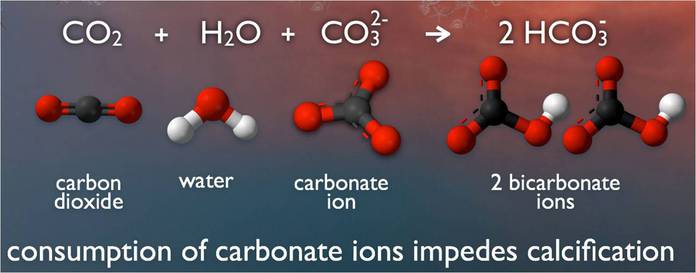
However, as CO2 is changed into carbonic acid(H2CO3) when absorbed by water, the pH (the acidity/ alkalinity) of seawater is reduced, and sea becomes undersaturated with calcium carbonate minerals, making it hard for corals to grow – compromising communities that depend on coral reefs for shelter and food, among others.

THREE: Coral reefs are important nurseries for fishes.
Due to their stability and biological richness, coral reefs, especially ones in shallow water, are vital ecosystems for nurturing juvenile fishes. Reefs also provide prey for consumption which the young fish needs to grow. These also provide protection from predators, as fishes can hide in crevices.

FOUR: Coral reefs are in massive decline due to climate change and human acitivity.
Coral reefs are not exempted from damages resulting from both natural and man-made activities. A study made by Hoegh-Guldberg et al. succinctly details responses of coral reefs to stresses:
“. First, the most direct response is a decreased linear extension rate and skeletal density of coral colonies…
Second, corals may maintain their physical extension or growth rate by reducing skeletal density… if rates of erosion outstrip calcification, then the structural complexity of coral reefs will diminish, reducing habitat quality and diversity. A loss of structural complexity will also affect the ability of reefs to absorb wave energy and thereby impairs coastal protection.
Third, corals may maintain both skeletal growth and density under reduced carbonate saturation by investing greater energy in calcification…which could ultimately reduce the larval output from reefs and impair the potential for recolonization following disturbances.”
As resilient as they are, reefs can only tolerate environmental stress for so long, and will continue to decline unless we do our part in stopping exploitation and pollution.

Image copyright: Carey Wagner, South Florida Sun Sentinel
FIVE: There is hope for coral reefs.
Research institutions and organizations are putting efforts into rehabilitating damaged reefs or building new ones. Technologies are being developed that optimize coral growth, while nurseries are being used to let corals grow until they’re big enough to be brought to sites of rehabilitation or establishment.
Aside from research, there are countless advocacies that promote eco-tourism, responsible diving, education, and information dissemination about the importance of coral reefs not only to nature, but to humans as well.
–
Coral reefs are wonderful communities! Their biodiversity, colorful parades of different creatures, and stunning beauty make them an important, living, and crucial members of the ocean’s dynamic ecosystem.
 The Kent Blog